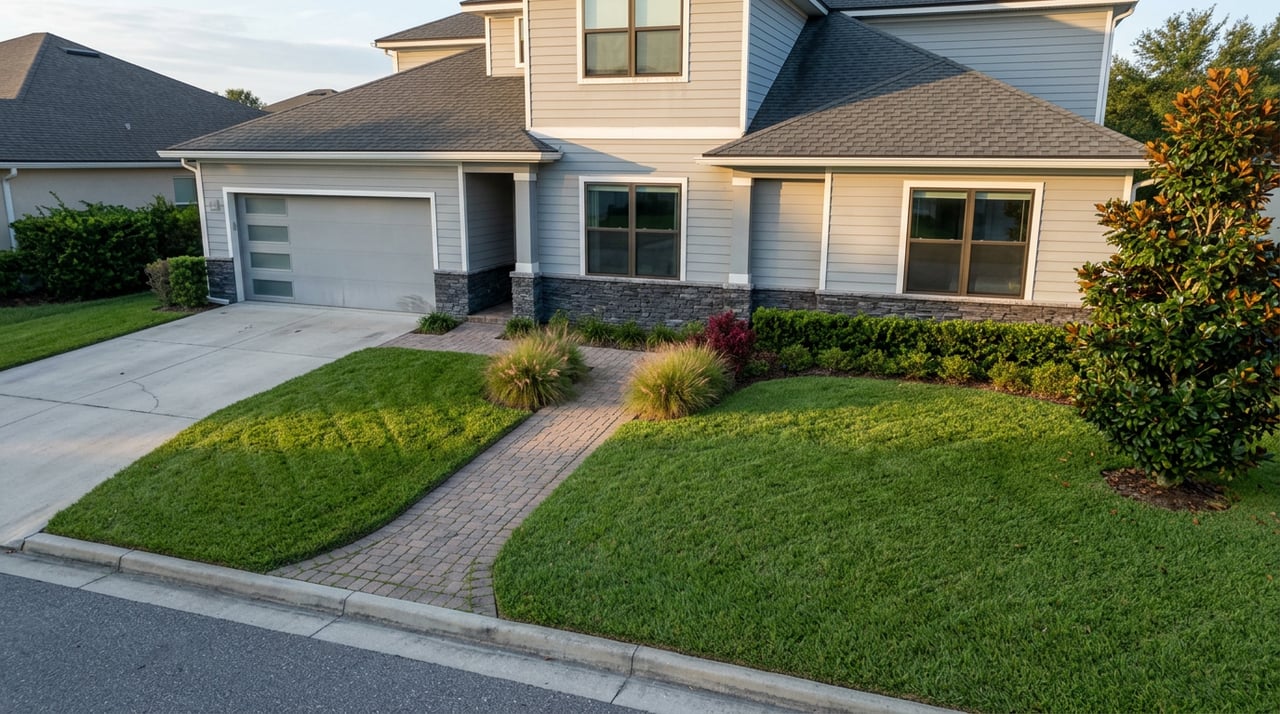
If you are looking at ChampionsGate vacation rentals, one question matters more than any glossy resort photo: can this specific property actually operate profitably as a short-term rental? That is where many buyers get tripped up. In ChampionsGate, the path from purchase to profit depends on parcel-level rules, local licensing, carrying costs, and day-to-day operations. This guide will walk you through what to check before you buy, what expenses to underwrite, and how to think about a smarter investment in Championsgate Village. Let’s dive in.
Why ChampionsGate draws vacation-rental buyers
ChampionsGate has clear appeal for short-term-rental investors because it was built around a resort-style experience. The community is marketed as a 1,500-acre destination southwest of Walt Disney World, with golf, dining, lodging, and the nearby Omni resort helping support its vacation-driven identity.
That said, ChampionsGate is not one uniform product. Official community information shows a mix of luxury golf condominiums, residential communities, apartment-style communities, and resort-oriented properties. For you as a buyer, that means the name “ChampionsGate” alone does not tell you whether a property fits your rental goals.
Start with parcel-level rental eligibility
This is the first checkpoint, and it should happen before you get emotionally attached to a property. Even within ChampionsGate, short-term-rental eligibility can change from one section to another.
Retreat at ChampionsGate is the clearest official example of a vacation-rental community within the broader ChampionsGate area. It describes itself as a premier vacation-rental home community, but even there, governing documents identify phases with short-term-rental restrictions. Specifically, Lots 1 through 127 in Phase 3 and Lots 1 through 74 in Phase 5 are identified as restricted.
That is why due diligence needs to happen at the parcel level, not just the neighborhood level. A home on one street may fit your investment strategy, while a similar home nearby may not.
Why the HOA structure matters
ChampionsGate can include multiple associations and overlapping obligations. The Retreat states that owners are members of the Retreat HOA, the Master HOA, and the Oasis/Retreat Club, and it also notes that ChampionsGate includes three separate HOAs.
For you, this affects more than paperwork. Different associations can shape guest rules, property access, monthly costs, and what is or is not allowed operationally.
Condo or detached home?
Some buyers compare detached vacation homes with condo-style options such as The Villas at ChampionsGate. The Villas are marketed as 59 luxury golf condominiums with two- and three-bedroom units near the Omni Orlando Resort.
The decision often comes down to your budget, target guest profile, and operating style. A detached home may offer more space for groups, while a condo may have a different maintenance profile and different association rules. The key is to compare the exact property type and governing structure, not just the area name.
Understand the legal path before you close
A property is not ready to produce income just because it is in a resort area. In Osceola County, local compliance starts with confirming that zoning allows short-term rentals.
Osceola County says the process begins by verifying zoning, then applying for a vacation rental license through the Florida Department of Business and Professional Regulation Division of Hotels and Restaurants, and then registering for a Local Business Tax Receipt through the Osceola County Tax Collector. DBPR also states that new public lodging establishments and new owners of existing establishments must obtain a license before operating.
Florida law classifies certain vacation rentals as transient public lodging establishments, including certain individually owned single-family to four-family dwellings and condo or co-op units. In practical terms, your ChampionsGate property needs both the right zoning and the proper license setup before you accept bookings.
Your pre-closing compliance checklist
Before you buy, make sure you can answer these questions clearly:
- Is the specific parcel allowed for short-term rental use?
- Is the property in a restricted phase or under a different association structure?
- What HOA, club, and district assessments apply?
- What guest registration, parking, and delivery rules will affect operations?
- What local licenses and tax registrations will be required before launch?
ChampionsGate operations can shape profitability
Many buyers focus on purchase price and projected nightly rate. Smart investors also study the operating rules that affect guest experience and management workload.
At the Retreat, room rentals are prohibited. Leases or rental agreements must cover the entire unit and be for residential purposes. Guests must be pre-registered for gate access, each registered guest is allowed only one vehicle, and each renter may have a maximum of eight vehicles enter per day.
Commercial vehicles and deliveries are also regulated. The Retreat also notes that some communities in ChampionsGate do not receive USPS mail because they are primarily used for short-term rentals.
These details matter because they shape how smoothly your property runs. They can also affect reviews, arrival instructions, vendor access, and how much support your property manager needs to provide.
Why property management is a real investment factor
The Retreat requires a copy of the owner’s management agreement with the property manager or management company before sharing certain property-related information. That is a strong sign that established local management procedures matter in this market.
If you are buying from out of state or want a hands-off setup, you should think beyond general management fees. You want to know whether your manager already knows ChampionsGate gate procedures, guest communication expectations, and vendor coordination rules.
Underwrite the deal with full carrying costs
If your goal is profit, you need a realistic budget from day one. Resort-style ownership often bundles useful services, but it also creates recurring fixed expenses that can pressure cash flow if occupancy dips.
For 2026, the Retreat lists monthly HOA assessments of $343 for single-family homes on 40-foot lots, $345 for single-family homes on 50-foot lots, and $402 for townhomes. According to the community, those assessments may support services such as landscaping, trash removal, roaming patrol, bulk cable, irrigation, and, for townhomes, exterior roofs and walls.
That can simplify your budget in some areas, but it does not make ownership cheap. You still need enough income to cover every recurring obligation.
Do not overlook club and district costs
The Retreat says owners are also members of the Oasis/Retreat Club, with separate payment information handled through True Club Management. On top of that, the ChampionsGate Community Development District explains that owners pay non-ad valorem assessments that may include both operations-and-maintenance and debt-service components on the annual tax bill.
That means your ownership costs may include several layers beyond principal and interest. If you skip those line items in your underwriting, your projected return can look stronger on paper than it will in real life.
A practical profit formula
When you evaluate a ChampionsGate vacation rental, build your numbers using a fully burdened approach. Your underwriting should include:
- Purchase price and financing costs
- Property taxes
- HOA dues
- Club dues
- CDD assessments
- Property management fees
- Cleaning costs
- Maintenance and repair reserves
- Insurance
- Utilities not covered by the HOA
- Replacement reserves for wear and tear
This kind of conservative approach helps you judge whether the property works as an investment, not just whether it looks attractive in a listing.
Know the tax stack on rental income
Taxes are one of the most important variables between revenue and actual profit. In Florida, short-term-rental income can carry multiple layers of tax.
Florida’s general state sales tax rate is 6%, Osceola County’s discretionary sales surtax is 1.5%, and Osceola County’s tourist development tax is 6% on short-term rentals. For many bookings under $5,000, the practical headline tax stack is 13.5% before platform or management fees. The state surtax applies only to the first $5,000 of a taxable transaction.
Osceola also notes that separately stated mandatory charges such as cleaning fees, processing fees, resort fees, and pool heat are taxable. That is important because many owners think only the nightly rent matters. In reality, those required add-ons can also increase the taxable amount.
What a smart buying process looks like
The best ChampionsGate investments usually come from disciplined buying, not guesswork. You want to verify that the property can legally operate, confirm exactly what it will cost to own, and understand the rules that will affect guests and management.
A strong purchase process often looks like this:
- Identify the exact parcel and association structure.
- Confirm short-term-rental eligibility for that property.
- Review HOA, club, and CDD costs.
- Verify zoning, licensing, and local registration requirements.
- Study guest-access, parking, and vendor rules.
- Build a conservative cash-flow model.
- Line up a manager who understands ChampionsGate operations.
That process may feel more detailed than a standard home purchase, but it is what helps move you from buying a property to running a business.
From purchase to profit in ChampionsGate
ChampionsGate can offer a compelling vacation-rental opportunity because the area was built with a strong resort identity. But profit does not come from the community name alone. It comes from buying the right parcel, understanding the rules, and underwriting the deal with clear eyes.
If you are considering a condo, townhome, or detached vacation home in Championsgate Village, the details matter. A careful review of association structure, licensing steps, taxes, and operating procedures can help you avoid expensive surprises and make a more confident investment decision.
If you want expert guidance on resort and vacation-home purchases in Central Florida, the Suzanne and Chad Team can help you evaluate opportunities with a practical, investor-focused approach.
FAQs
What makes ChampionsGate attractive for vacation-rental buyers?
- ChampionsGate is a resort-oriented community in Osceola County with golf, dining, lodging, and nearby resort amenities, which helps explain why many buyers consider it for short-term-rental use.
What should buyers verify about short-term-rental rules in ChampionsGate?
- You should verify the exact parcel’s rental eligibility, because rules can vary by phase, street, and association structure, even within the same broader community.
What licenses are needed for a ChampionsGate vacation rental in Osceola County?
- Osceola County says you should verify zoning first, then obtain a vacation rental license through the Florida DBPR Division of Hotels and Restaurants, and then register for a Local Business Tax Receipt through the Osceola County Tax Collector.
What operating rules can affect a vacation rental at the Retreat at ChampionsGate?
- Retreat rules include whole-unit rentals only, guest pre-registration for gate access, one vehicle per registered guest, and a maximum of eight vehicles entering per renter per day.
What recurring costs should buyers include when underwriting a ChampionsGate vacation rental?
- You should include mortgage costs, property taxes, HOA dues, club dues, CDD assessments, management, cleaning, insurance, maintenance, utilities not covered by the HOA, and replacement reserves.
What taxes apply to short-term-rental income in Osceola County?
- Short-term rentals may be subject to Florida state sales tax, the Osceola County discretionary sales surtax, and the Osceola County tourist development tax, with mandatory charges like cleaning and pool heat also noted as taxable.